
Immigration
October 14, 2026

International Labour Organization to help Turks and Caicos build $2.1 million labour market system
www.newslinetci.com (Opens in new tab) | Author: Vivian Tyson, NewslineTCI Editor | Published: 10/14/2026
The Turks and Caicos Islands Government is partnering with the International Labour Organization to develop a $2.1 million Labour Market Information System. Announced on October 14, 2026, the initiative aims to improve employment opportunities for Islanders by identifying local skills and providing better data for foreign labour decisions. Deputy Premier Jamell Robinson explained that the project includes a skills audit to determine existing expertise. The government is restructuring the Employment Services Department to better enforce business staffing plans designed to help workers move into management roles. A central feature is mandatory registration for all workers to ensure the department has a comprehensive view of the workforce. “We have to make sure that we are the leaders of our own destiny,” said Deputy Premier Jamell Robinson, noting that the system will use National Insurance Board and National Health Insurance Board clearance letters to verify employment arrangements. Officials aim to deliver the system within approximately 12 months. The project will evaluate the more than 24,000 active work permit holders to ensure their permit categories reflect their actual duties. While the initial priority is registering the domestic workforce, the government is exploring an online portal to allow skilled Islanders living abroad to submit their qualifications for suitable vacancies.

Governor Calls for Affordable Homes as Growth Squeezes Working Residents
www.newslinetci.com (Opens in new tab) | Author: NewslineTCI | Published: 10/14/2026
Her Excellency Governor Dileeni Daniel-Selvaratnam addressed the Informal Settlements Unit roundtable for World Habitat Day 2026, calling for efforts to improve housing access for working residents across the Turks and Caicos Islands. She warned that the territory's economic success has created significant affordability pressures, making it difficult for many to secure stable homes. The Governor noted that housing challenges extend beyond unauthorized settlements to employed individuals struggling to achieve home ownership. She argued that authorities must prioritize “whole communities” with access to schools and utilities rather than isolated developments. While acknowledging that informal settlements house vulnerable families, she emphasized that these areas create public health and safety hazards. She called for coordinated action across the Housing, Planning, Immigration, Police, Health, and Social Development departments to resolve these issues. The government intends to engage private sector partners, including developers and utility providers, to help shape sustainable growth. The Governor stated the state must balance firm enforcement against illegal settlements with the creation of legitimate opportunities for residents. The ultimate goal remains a society where lawful residents can live with dignity and security, ensuring the aspiration of a safe, affordable home is within reach.
October 13, 2026

Born Here, Raised Here, but Still Unable to Vote: Is this a Conundrum for TCI Electorate?
magneticmediatv.com (Opens in new tab) | Author: Deandrea Hamilton | Published: 10/13/2026
In an opinion piece published on October 13, 2026, writer Ed Forbes argues that the Turks and Caicos Islands must address a growing democratic gap. He contends that many young adults born and raised in the territory are excluded from voting because they do not hold Turks and Caicos Islander Status. Section 55 of the Turks and Caicos Islands Constitution Order 2011 dictates that only those with Islander Status can register to vote, a requirement not automatically met by birth or British Overseas Territories Citizenship. Forbes notes that while the population grew from roughly 33,500 in 2011 to a projected 52,299 in 2025, estimates suggest fewer than one in four residents currently holds the required status. He argues that many long-term residents are effectively disenfranchised, either because they lack a clear legal path to status or struggle to navigate the complex application process. Forbes urges the Government to collaborate with the Islander Status Commission and the Elections Department to review how many TCI-born adults face these barriers. With the next general election roughly two and a half years away, he emphasizes that authorities must act now to evaluate whether legislative reforms are necessary to ensure future electoral inclusion.
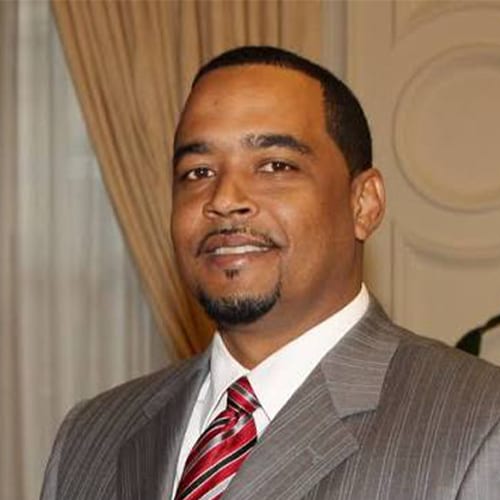
PDM Leader Douglas Parnell wants immigration, health bills delayed until 2027 for public consultation
suntci.com (Opens in new tab) | Author: Daisy Handfield | Published: 10/13/2026
People’s Democratic Movement (PDM) Leader Douglas Parnell is urging the government to delay the Immigration Bill 2026 and the Health Services Authority Bill until 2027. Parnell argues that citizens in the Turks and Caicos Islands require at least three months of public consultation, including town hall meetings, before Parliament considers these major legislative changes. Parnell claims the government has failed to disclose potential financial risks regarding the InterHealth Canada contract termination, alleging liabilities could exceed US$200 million. He also questioned spending on consultants, citing high costs for InterPath and United Kingdom advisers, and noted the National Health Insurance Board was placed under administration in early 2025. Parnell accused officials of rushing legislation without public participation, warning that this approach leaves residents feeling excluded from decisions impacting their healthcare access. The Opposition leader intends to continue challenging the proposals through parliamentary debate if the government proceeds without further review. Additionally, Parnell demanded transparency regarding three individuals currently seeking asylum, including an Iranian national who has been present for over a year. He noted that the government has a legal obligation to explain the process for these applicants, emphasizing that failing to address these concerns reinforces the perception that the administration is operating without sufficient transparency or resident input.

Employers with 15 or more work-permit holders could face new staffing requirements
suntci.com (Opens in new tab) | Author: Daisy Handfield | Published: 10/13/2026
The proposed Immigration Bill 2026, dated September 22, 2026, introduces new staffing requirements for businesses in the Turks and Caicos Islands that rely on foreign labour. Under this legislation, companies employing at least 15 work-permit holders may be required to submit detailed plans outlining how they will prioritize hiring locals for available positions. Minister of Immigration and Border Services Jamell Robinson stated these reforms aim to enforce a "locals first" employment policy. Section 45 mandates that affected employers submit staffing reports within six months, including recruitment policies and growth projections. Robinson noted, “Turks and Caicos Islanders will have the first right to any industry.” However, the legislation contains a discrepancy, as the bill text specifies 15 work-permit holders while the explanatory notes reference 50. The Commissioner holds the authority to designate additional employers for these requirements, potentially capturing businesses below the threshold. To support these transitions, the government is developing a national skills database to match local qualifications with job opportunities. If enacted, the legislation will require companies to demonstrate a commitment to developing the local workforce, subject to government clarification on the threshold for these mandatory staffing plans.

Turks and Caicos Islanders to get first priority under proposed tiered public-school system
suntci.com (Opens in new tab) | Author: Daisy Handfield | Published: 10/13/2026
Minister of Immigration and Border Services Jamell Robinson has unveiled a proposed tiered admission system for government schools in the Turks and Caicos Islands. Under this plan, local children would receive first priority for enrollment, with British Overseas Territories Citizens and other permit holders accessing only remaining vacancies to manage public school capacity. To ensure families can afford private education, the government proposes that work-permit holders must earn at least US$60,000 annually to endorse a first dependant, with an additional US$12,000 required for each subsequent family member. Applicants' declared incomes will be verified against National Insurance Board and National Health Insurance Board contributions. While civil servants remain exempt, the system aims to limit classroom sizes, with Robinson stating, “The spaces are ordinarily for Turks and Caicos Islanders, PRC holders and BOTC holders.” Implementing these changes will require a comprehensive review of existing processes, a transition Robinson estimates could take approximately one year. Officials intend to introduce annual registration for all students to accurately assess capacity and ensure local children are prioritized before vacancies are opened to others. The specific application of these tiers remains under development.
October 7, 2026

110 Migrants Detained in TCI Maritime Interdiction
www.newslinetci.com (Opens in new tab) | Author: NewslineTCI | Published: 10/7/2026
The Royal Turks and Caicos Islands Police Force (RTCIPF), working with the Turks and Caicos Islands Regiment and Border Force, detained 110 irregular migrants during a maritime interdiction operation on October 7, 2026. Marine assets transported the group, consisting of 87 males and 23 females, to the dock for processing by immigration authorities. Authorities are currently responding to a separate migrant vessel incident, with further details to be released as they become available.
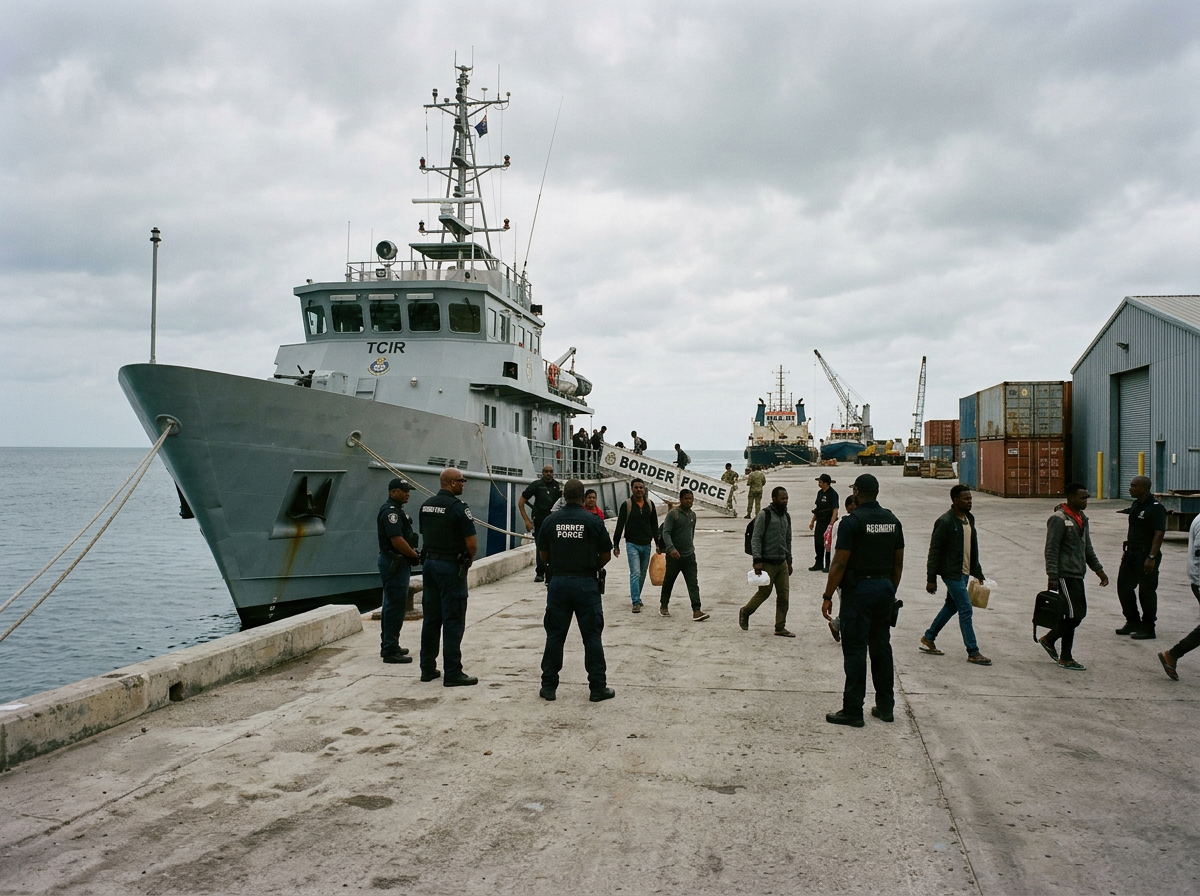
110 Irregular Migrants Detained Following Maritime Interdiction
www.tcipolice.tc (Opens in new tab) | Author: tcipoladmin | Published: 10/7/2026
On October 7, 2026, the Royal Turks and Caicos Islands Police Force (RTCIPF), the Turks and Caicos Islands Regiment, and Border Force intercepted a vessel at sea. This maritime operation resulted in the detention of 110 irregular migrants, who were transported to the dock for processing. The group, comprised of 87 males and 23 females, is currently undergoing standard immigration procedures. Authorities are also responding to a separate migrant vessel incident and will release further details later.
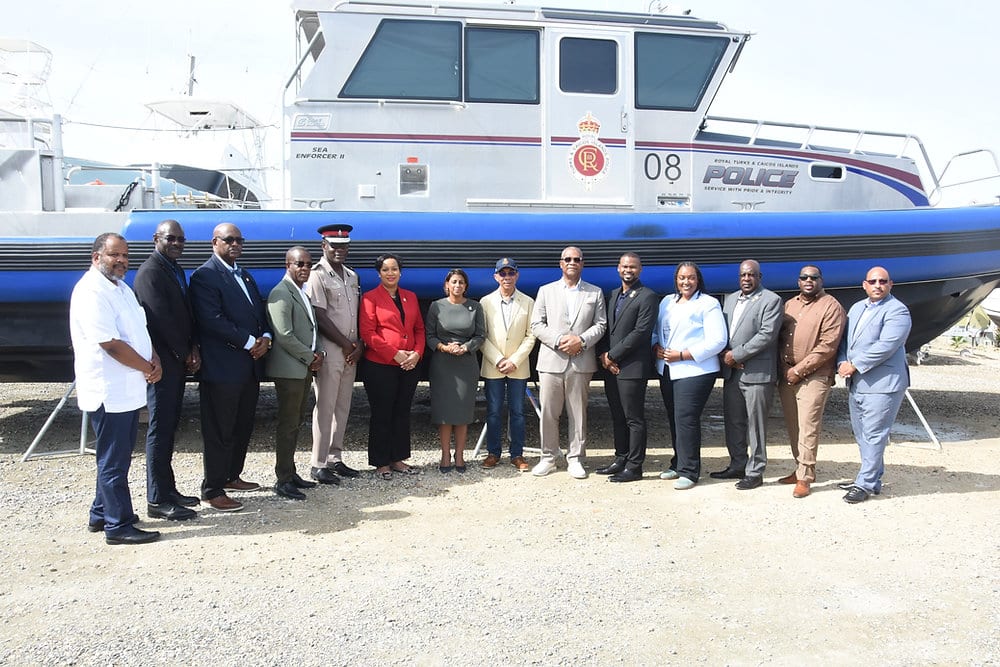
$3.5 million police boats commissioned to boost border security
www.newslinetci.com (Opens in new tab) | Author: Vivian Tyson, NewslineTCI Editor | Published: 10/7/2026
The Royal Turks and Caicos Islands Police Force (RTCIPF) commissioned two new patrol vessels, Sea Guardian II and Sea Enforcer II, on 1 October 2026. Built at a cost of $3.5 million, these boats are intended to enhance the nation's capacity to intercept illegal migrant vessels and disrupt organized crime across the archipelago's waters. Premier Charles Washington Misick stated the vessels took 18 months to construct, noting, “We refuse to ask our officers to fight modern, sophisticated security threats with outdated tools.” Commissioner of Police Fitz Bailey stressed that the investment requires rigorous maintenance and accountability to be effective. Additionally, Governor Dileeni Daniel-Selveratnam noted that while major crime categories have seen substantial reductions in 2026, the ongoing instability in Haiti necessitates continued vigilance against trafficking networks. Regional cooperation remains central to the security strategy, with Jamaica pledging to continue assisting with marine policing training and intelligence sharing. These vessels will bolster search and rescue operations while protecting coastal communities and vital infrastructure. The government intends for this acquisition to serve as part of a broader investment in policing, defense, and the justice system to sustain the territory's tourism-dependent economy.
October 6, 2026

Jamaica pledges stronger security support for Turks and Caicos Islands
suntci.com (Opens in new tab) | Published: 10/6/2026
Jamaica’s Deputy Prime Minister and Minister of National Security and Peace, Dr. Horace Chang, visited the Turks and Caicos Islands to formalize a security partnership. He pledged to provide policing expertise and training to help the territory combat violent crime, arriving on Wednesday. Dr. Chang, accompanied by Jamaica’s Commissioner of Police Kevin Blake, met with Governor Dileeni Daniel-Selvaratnam and Premier Charles Washington Misick. The delegation attended the commissioning of two new Royal Turks and Caicos Islands Police Force marine patrol vessels, *Sea Guardian II* and *Sea Protector II*. Dr. Chang noted that Jamaica’s experience confronting crime allows it to offer proven training, stating, “Where we can work with each other, we should do so.” The visit highlighted that several experienced Jamaican officers are already serving within the local force, including Commissioner of Police Fitz Bailey. Jamaica intends to assist the territory in developing the institutional capacity required to build a sustainable police force. While Jamaica cannot deploy significant marine personnel, Dr. Chang confirmed it will provide training to strengthen the local marine squad. He emphasized that security is fundamental to protecting the economic and social progress of the Turks and Caicos Islands, warning that violence could undermine these national gains.

$60,000 annual income required to endorse dependants under proposed immigration changes
suntci.com (Opens in new tab) | Author: Daisy Handfield | Published: 10/6/2026
Work permit holders in the Turks and Caicos Islands would face new financial requirements to endorse dependants under the proposed Immigration Bill 2026. If passed, applicants must earn at least $60,000 annually to support a spouse or child, a threshold designed to ensure families can cover local living costs. Immigration Minister Jamell Robinson stated the policy acts as a "litmus test" to verify that permit holders can afford local expenses. To endorse a first dependant, a worker must earn $5,000 monthly, with each additional dependant requiring an extra $12,000 per year. Authorities will verify these earnings through National Insurance Board and National Health Insurance Plan contributions. Robinson noted that while these rules apply broadly, government employees remain exempt from restrictions regarding public school access, ensuring they retain the option to enrol dependants in the government system regardless of private income. These changes are included in the Immigration Bill 2026, which also empowers immigration authorities to demand proof that applicants possess sufficient financial resources. Case workers and labour personnel will use these criteria when reviewing work permit renewals to ensure permit holders can adequately support their dependants.

New freelancer’s work permits to be discontinued under immigration overhaul
suntci.com (Opens in new tab) | Author: Daisy Handfield | Published: 10/6/2026
The government of the Turks and Caicos Islands plans to discontinue all new and first-time Freelancer’s Work Permits under the proposed Immigration Bill 2026. While the new legislation will remove this category from the immigration framework, more than 600 current permit holders will be allowed to complete their path to residency. Immigration Minister Jamell Robinson stated that the change addresses the high volume of people utilizing this visa type. Under the transitional provisions, individuals who currently hold a valid permit may renew it to finish their 10-year qualifying period for a Permanent Residence Certificate, rather than transitioning to the proposed 20-year route required for others. The government intends to stop issuing any new permits once the new system takes effect, ensuring those already in the system can still reach eligibility.

20 YEARS TO QUALIFY FOR PRC
suntci.com (Opens in new tab) | Author: Daisy Handfield | Published: 10/6/2026
Proposed immigration reforms in the Turks and Caicos Islands would double the time required to qualify for permanent residency. The Immigration Bill 2026 introduces a 10-year Residence and Employment Rights Certificate (RERC) that must be held for 10 years before applying for a Permanent Residence Certificate (PRC). Minister of Immigration Jamell Robinson explained the legislation introduces a Points Based Assessment System evaluating factors like English proficiency and financial stability. Most work permit holders will face a 10-year term limit, though 11 categories—including teachers, health professionals, and law enforcement—are exempt. RERC holders may reside in the islands for 10 years, subject to annual fees. Applicants must provide two character references from Islanders and undergo a public notification process, where details are published in local media for a 30-day period for review. Transitional provisions allow those who already qualify or reach the 10-year mark within 12 months of the law's enactment to apply under the current system. People with 10 years of residency who do not currently qualify may instead apply for an RERC. As of October 6, 2026, the proposed legislation requires RERC holders to apply for permanent residence at least 12 months before their certificate expires.
October 5, 2026

PDM Demands Town Halls Before Immigration and Healthcare Bills Are Passed
www.newslinetci.com (Opens in new tab) | Author: News Release | Published: 10/5/2026
The People’s Democratic Movement (PDM) is calling on the Misick Government to pause the final passage of the Immigration Bill 2026 and the Health Services Authority Bill. The party demands public consultations across every inhabited island in the Turks and Caicos Islands before these significant pieces of legislation proceed. Opposition Leader Hon. Edwin Astwood argues that online consultation is insufficient and that ministers must meet citizens directly to explain the proposed regulations. He stated, “Meeting one professional association is not consultation with the country.” The PDM highlighted concerns about how immigration changes will impact local employment and business, as well as the financial implications of the proposed health authority, which would operate within a national budget exceeding half a billion dollars. Astwood urged the government to avoid its pattern of passing rushed legislation that requires subsequent amendments. The PDM is requesting a structured consultation period of at least three months, extending to six months if substantial revisions are necessary. They are also calling on the Governor and the United Kingdom Government to intervene and ensure public participation, citing Article 73 of the United Nations Charter. The opposition insists that the government must publish all accompanying regulations for review and explain which public recommendations are accepted or rejected before the bills are finalized.
October 2, 2026
Official Gazette Vol177 No56 · October 2, 2026 (13 notices)
drive.google.com (Opens in new tab) | Author: TCI Government Gazette | Published: 10/2/2026
The Official Gazette Vol 177 No 56, published October 2, 2026, outlines 13 official notices concerning government appointments, land records, deportations, and public tenders. The publication covers ministerial reassignments, planning applications for new developments, and upcoming deadlines for government contracts across the Turks and Caicos Islands. Minister Jamell Rayan Robinson ordered the deportation of Francis Jean, while Governor Dileeni Daniel-Selvaratnam appointed Khalila Astwood as acting Attorney General through October 4, 2026. Separately, the Registrar of Lands is replacing five lost land certificates, and Keisha Rosheal Butterfield applied for planning permission for a commercial complex in Long Bay Hills. Little Development Company Ltd also proposed a boutique villa development in North Caicos. Representations regarding the two planning applications must be submitted by October 30, 2026; proposals for the White Sands Beach Hotel are due October 7, 2026; tenders for Change Management, Population Policy, JAGS McCartney architectural work, and Chalk Sound sidewalks close October 28, 2026; and tenders for Airfield Design Engineering Services close November 11, 2026.