
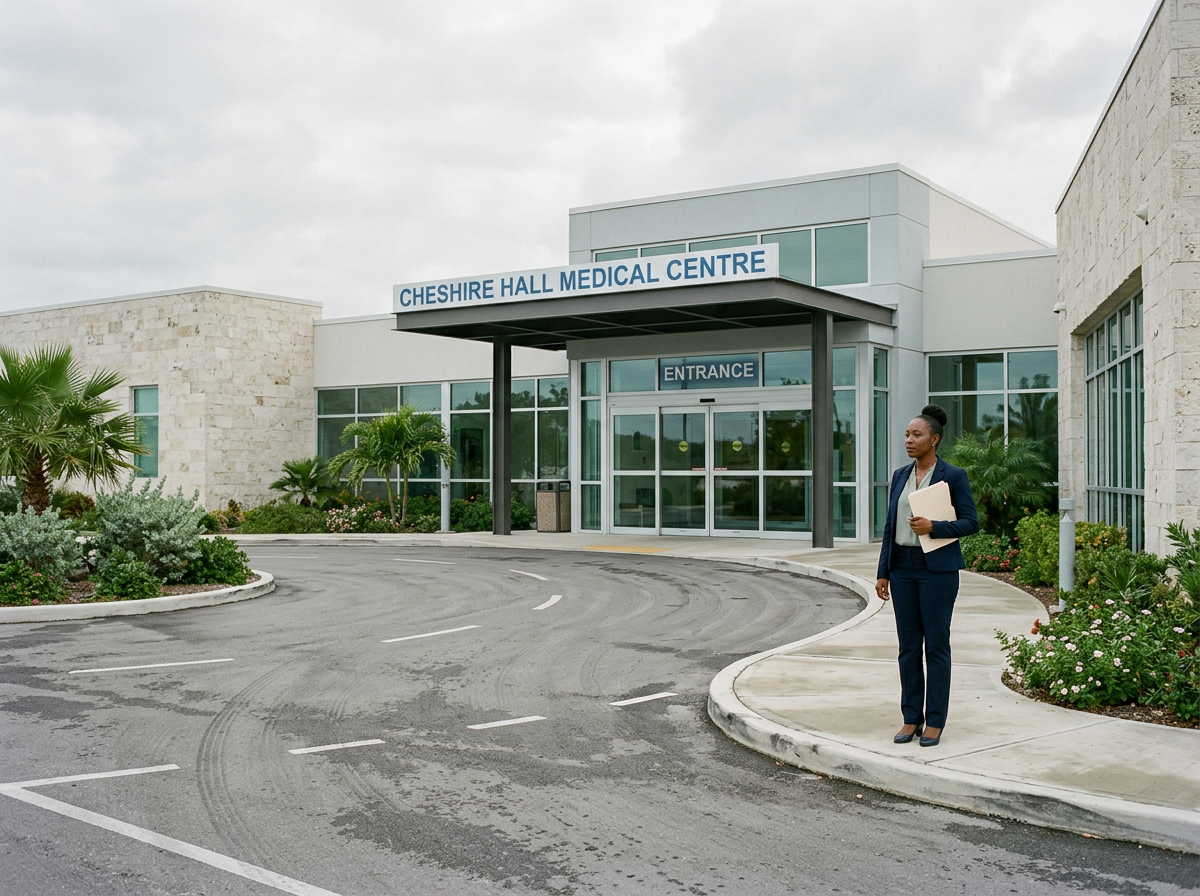
The Turks and Caicos Islands are currently navigating a period of intense institutional transition, marked by significant anxiety regarding public health and national security. The termination of the InterHealth Canada contract has emerged as the most pressing concern, creating uncertainty regarding the future of hospital services at Cheshire Hall and Cockburn Town. Opposition Leader Doug Parnell has issued a 48-hour ultimatum, demanding that the government disclose the specific terms of the transition. He has cited a potential 200 million dollar exposure and noted that the joint transition committee has yet to convene, fueling public concern over the continuity of care.
Simultaneously, the Royal Turks and Caicos Islands Police Force Marine Branch is facing an unprecedented operational strain. In a single 48-hour window, authorities intercepted three vessels, bringing over 500 people ashore. With over 1,000 individuals intercepted across eight vessels this year, the humanitarian crisis driven by instability in Haiti continues to demand significant resources, forcing a re-evaluation of border security strategies.
National governance remains a focal point following the visit of UK Minister for Overseas Territories Uma Kumaran. During her meetings with the Governor, the Premier, and the Opposition, the dialogue centered on national security and economic growth. Tensions persist regarding constitutional reform, with Opposition Leader Edwin Astwood expressing concern that the government’s plan to expand the executive branch may marginalize dissenting voices. Meanwhile, the government has implemented a six-month moratorium on commercial Crown Land allocations in Providenciales, an admission that the current system requires a comprehensive, computerized inventory to replace ad-hoc management.
Economic pressures are mounting as the government seeks to modernize infrastructure through new revenue streams. The Port Authority’s revised fee structure has sparked alarm within the business community, as small retailers fear that increased handling costs will inevitably be passed to consumers, further inflating the cost of living. In response to these fiscal challenges, the government has introduced a new waste management protocol for the cruise port, mandating that cruise lines process a higher percentage of solid waste before leaving territorial waters. This policy aims to protect the marine environment, which remains the backbone of the tourism industry.
Infrastructure projects are showing signs of progress, albeit with lingering skepticism regarding timelines. The expansion of the water desalination plant in North Caicos is entering its final phase of environmental compliance, promising to stabilize water pressure for residents in Kew and Whitby. Additionally, the government has broken ground on a battery storage facility to integrate solar arrays with the existing diesel grid, a critical step toward stabilizing power in North and Middle Caicos. In the education sector, the Ministry has expanded eligibility for technical and vocational training scholarships, aligning funding with labor gaps identified by the Chamber of Commerce. Literacy initiative assessments in primary schools have also shown positive data, with improved teacher retention rates attributed to new housing stipends for educators in the outer islands.
Despite the heavy news cycle, there are notable local achievements. Aaron Lawrence has returned from high-level goalkeeping training with FIFA and Concacaf, bringing international standards to local football. Dawn Hilary Higgs has released a new financial workbook, Before Sunrise, offering practical guidance on economic independence. As the territory looks toward the September 23 deadline for redevelopment proposals for the White Sands Beach Hotel, the focus remains on balancing rapid economic growth with the foundational stability required for long-term prosperity.