
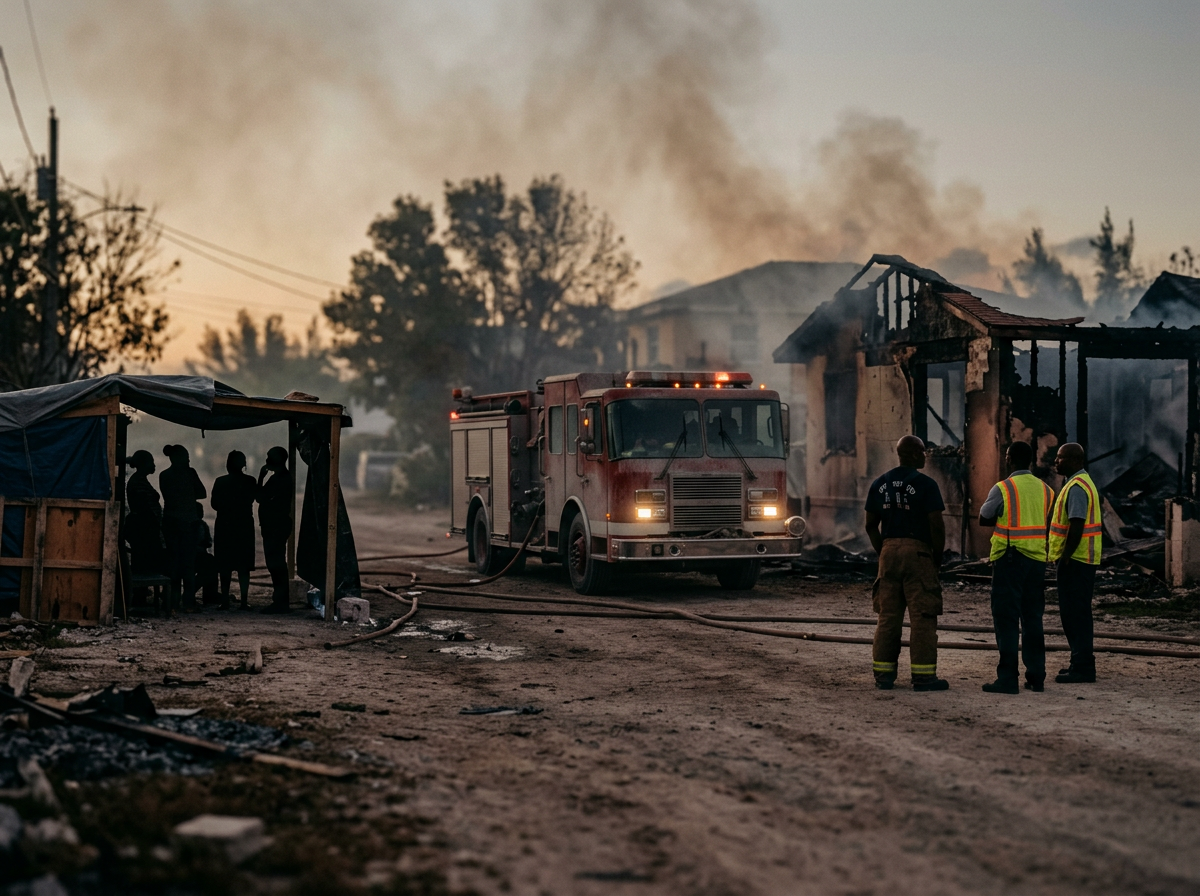
The island awoke on Monday to a pre-dawn blaze in Five Cays that consumed thirteen homes before the first water tender arrived. Only one functional fire apparatus was on the island, leaving families in the dark for more than two hours while an off-duty firefighter and airport crews battled the flames. Minister of Public Safety Shaun Malcolm announced a cabinet-approved review of equipment needs, but the replacement truck could take twelve to fifteen months to arrive. Education Minister Rachel Taylor pledged funding for new domestic fire trucks and a dedicated fire station, echoing long-standing calls for better resources. Local fire chief Dr Hezedean Smith credited community sheltering and volunteer bravery for averting a larger tragedy and said the new station will house a modern engine and a second water tender, dramatically cutting response times.
The disaster coincided with the rollout of the Cost-of-Living Relief (COLR) programme, which will deliver cheques directly to eligible disabled or home-bound residents beginning 1 September. The Ministry of Finance reported that 68.4 % of the 15,546 applications processed to date were approved, with most beneficiaries using the funds for utilities and living expenses. Premium gasoline on Providenciales now sits at $7.90 per gallon, the second-most expensive in the Caribbean, intensifying the financial strain on families already reeling from the fire.
Opposition leader Edwin Astwood seized the moment in the Legislative Council, accusing Premier Washington Misick of squandering his landslide mandate and failing to curb the cost-of-living crisis. The Premier defended his administration, noting that the COLR programme directly addresses the crisis and that the fire-service review will produce a detailed report within 30 days. Critics argue that without swift action, promises remain “hot air.” Meanwhile, the Royal Navy’s HMS Trent docked offshore to conduct joint disaster-preparedness training with the Department of Disaster Management, underscoring the need for external support while local capacity is bolstered.
Legal notices published in the Official Gazette this week included probate citations and property cautions, the latter sparking debate over their potential to stall legitimate development amid the six-month Crown Land moratorium announced on 17 August. The moratorium, aimed at inventorying Crown Land and reforming governance, exempts residential and existing contracts but pauses fresh commercial ventures that could boost tourism revenue. Deputy Premier Jamell Robinson defended the pause as essential for sustainable development, while opposition voices warn it may drive investors to competing Caribbean destinations.
In other government initiatives, nine new Border Force officers began a two-week training programme covering forged-document detection and child protection, reflecting a broader push to tighten immigration and customs enforcement. A recent cabinet meeting on hurricane preparedness highlighted the need for coordinated inter-agency response, noting that even a below-normal season still poses risk. The Department of Maritime and Shipping launched a 24/7 online portal for vessel inspections and licences, promising faster compliance, and the Telecommunications Commission licensed Starlink Caribbean, introducing the first satellite-internet service to the islands—an upgrade that could transform telemedicine and remote education.
Community resilience shone through numerous grassroots efforts. The Turks and Caicos Divine Nine donated over $1,500 in diapers to families displaced by the Five Cays fire, while the Blue Hills waterfront project remains stalled, with only a single gazebo roof completed despite a 2026 budget allocation of $800,000 for signage and park upgrades. Youth energy was on display at Pelican Energy’s sixth Youth Energy Roundtable, where university students presented solar-integration research to President Devon Cox, and the Summer READY Programme offered clinical exposure to students, linking health and climate resilience. The Soroptimist International 5K run-walk, held to mark World Day Against Trafficking in Persons, attracted over 150 participants and raised both awareness and funds.
Tourism-related developments offered a brighter outlook. The spiny lobster season opened on 1 August, yielding more than 35,000 lb in the first three days, with South Caicos accounting for three-quarters of the catch—fueling restaurants, resorts and local income. Pelican Energy commissioned a 414-kW rooftop solar system at Salterra Resort on South Caicos, projected to generate 665 MWh annually and cut 492 tonnes of CO₂, while Salt Cay’s second reverse-osmosis plant now supplies an estimated 14,000 gallons of water per day, reducing reliance on bottled water. These green projects aim to lower diesel dependence, curb the $7.90 per gallon fuel burden, and enhance the islands’ appeal to eco-conscious travellers.
Together, the fire-service review, COLR cheque delivery, land-reform moratorium, and infrastructure upgrades illustrate a government juggling immediate crises with long-term modernization. Community initiatives—from diaper drives to solar research—demonstrate a resilient spirit that fills gaps while official resources lag. The coming months will test whether promises translate into tangible assets before the next emergency strikes, but the collective momentum suggests the islands are poised to turn unfinished promises into finished projects.